

The common stereotype that plagues Americans is that the average American does not know anything about world geography. Whether that is true or not, that stereotype has been amplified through media, especially online social media.
You may see videos of street interviewers asking Americans questions about geography, which they often aren’t able to answer. I constantly see posts bashing Americans for being bad at geography, and it makes me angry. That’s why I set out to find out how much American highschoolers know about political geography.
I spent a few lunch periods in the cafeteria this past week. I interviewed ten students from each grade level here at Elder, and the results I found were astonishing. I asked each of the 40 students about 4 different countries on a map of the world. I had each student point out France, China, India, and Brazil on the map.
Contrary to the stereotypes, most students were able to identify all or most of the four countries I asked about. In fact, the majority of students that I interviewed answered correctly
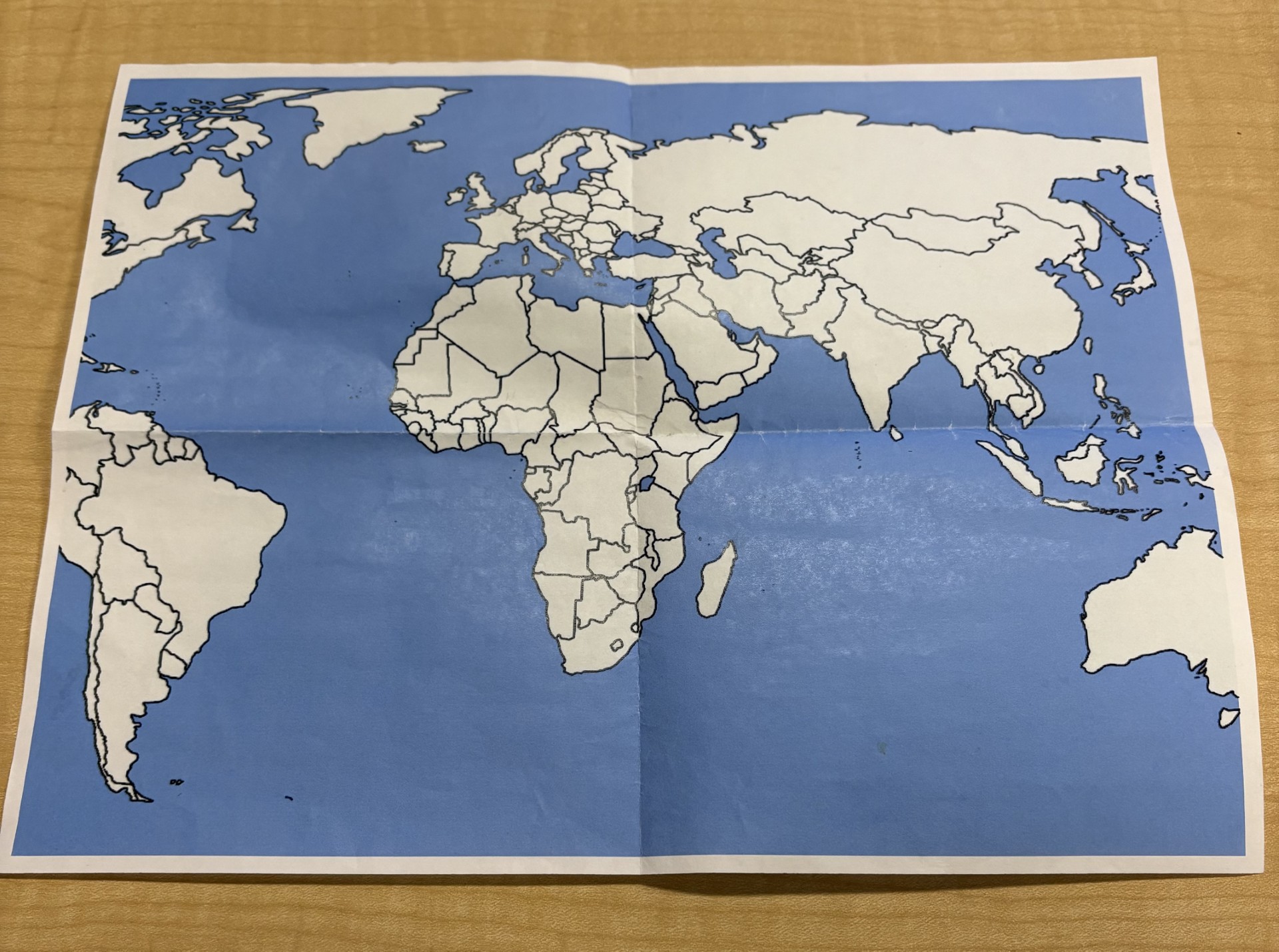
and with confidence. Unfortunately, many of the students were not able to point out France on a map, as it was the most commonly missed. Only half of the ten freshmen were able to locate France, as well as only four of the sophomores.
Another noteworthy piece of data that I noticed was that the number of correct answers grew with each grade level. Clearly, this means that Elder is having an impact on the geographical knowledge of its students, even if it is a small impact. However, this is not enough.
The abundance of incorrect answers and students who are unable to point out even the most recognizable countries in the world is concerning to say the least. It is the job of the American education system to teach students about the world that they will be thrown into at the end of their schooling. This data reveals just how little American kids really know about the world around us and outside of the United States.
It is important to make sure that kids graduate basic high school with a knowledge of the world, and that definitely includes basic geography. Geographical education should be stressed in schools in order to teach students about the entire world instead of keeping them in a bubble here in the US. Unfortunately, it is not stressed enough, even at Elder, as many Americans fail to recognize simple aspects of the rest of the world.
Surely, the results of this survey of Elder students should raise concerns over the failing American education system, and the emphasis put on geography and world events at Elder High School.