
Quentin Tarantino is considered by many to be, if not the best, one of the best directors of all time. His brilliant use of a camera to create something people faun over for generations is awe inspiring. Yet many come to criticize Tarantino for a plethora of aspects. Some may say his pacing is slow or that he is a racist filmmaker, but they all seem to forget the fact that Tarantino does everything with a purpose. This purpose is most evident in The Hateful Eight.
The Hateful Eight is a post-Civil War western mystery taking place at a small log cabin during a snowstorm. A bounty hunter named John Ruth is traveling with a fugitive prisoner, Daisy Domergue, when they are forged to take shelter in said log cabin. As tensions rise the group beings to suspect that not everyone is who they claim to be. The film then begins to slowly reveal the hidden motives, betrayals, and violent secrets, leading to the final standoff were most everyone dies. The film originally had a similar death when the script was leaked, and Tarantino believed it ruined the impact of the film leading to the project’s abandonment. However, three months later a live reading of the script at United Artist Theater reignited his interest in the film leading to two new scripts being written.
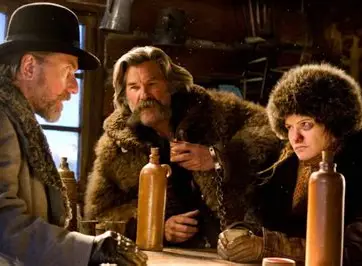
The entire projects is really an overexaggeration of the “biggest problem” portrayed in a realistic light. This problem being humans and our selfish ways. Tarantino used the setting of the wild west to give himself the freedom to show the brutal side of humanity while keeping a plausible and charming story. Tarantino would also use Ultra Panavision 70mm film and shot in 2.76:1 to capture the wide variety of colors and details that would keep the audience immersed in his story. Large outdoor shots and cramped indoor shots could be achieved on the format leading to the eventually decision to shot on such an unordinary format. The vibrant colors would be in stark contrast to the brutality happening on screen allowing for more violence because the audience would be enthralled with the beauty of the film.
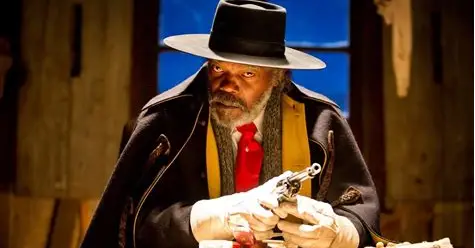
Casting was also a very large reason the film was so potent in its delivery. Samuel L. Jackson, a favorite actor of Taratino, played Major Marquis Warren, a clever and intimidating bounty hunter. His role was a typical one for Jackson as he lit up the screen with his charming almost arrogant persona. Kurt Russell was another well casted actor who felt comfortable with his role as John Ruth, a rough and stubborn bounty hunter. Yet Jennifer Jason Leigh is in contrast to the first two with her role as Daisy Domergue, bringing unpredictability to the film and being a different role from previous jobs of hers. Walton Goggins played Christ Mannix with a mix of humor and tension, he brought a calm knowing to the character because he has played so many close to Mannix in the past. Tarantino chose actors who were comfortable with the role to really reinforce the quiet confidence held by most during that period of time and only mixing it up with a character like Daisy Domergue due to her already perceived insanity by the audience. Overall, the actors fit their roles very naturally and helped make the movies atmosphere feel intense and believable.
The main character only sold part of the story and the rest of it was filled in by the supporting characters. Tim Roth fit well as Oswaldo Mobray due to his clam polite behavior that always hinted to fakeness to the character; even from the start with the British accent. Demian Bichir added tension as Bob the quiet Latino, making the audience unsure whether he could be trusted and Bruce Dern drove in the winning run with his portrayal of the racist southern gentleman General Smithers. Without the outstanding performances of the supporting cast the movie would have feel short. The entirety of the movie needed to be perfect because the illusion that pulls audience in would have been shattered if even the slightest lamp was misplaced.
The movie mainly relies on practical effects to really sell the homage to old western films. CGI was still used but during most of the violent scenes practical effects were used to keep it grounded. Another element of production was Ennio Morricone’s soundtrack, whose old western tracks added suspense while not destroying the feel of the movie. The whole storm of choices made the movie stand out from many modern takes on westerns because it really stayed rooting but refined the techniques.
In all the film was a brilliant film that deserves all of it flowers. Tarantino did not fail to leave his mark on the western as many compare it to some of the greats. His thoughtfulness and love of the filmmaking process really shine in this film. This film certainly conjoined the thoughts of main that Tarantino is the best to ever do it.